
Whether you are running a small business or managing a household budget, knowing how to best keep track of expenses is the difference between feeling in control and scrambling to figure out where all your money went. This guide walks you through proven expense tracking methods, practical tools, and habits that help you stay on top of your finances year-round.
Key Takeaways
Tracking expenses helps create a realistic picture of your finances and reveals areas for potential savings. Before diving into the details, here is what matters most:
- Consistent expense tracking is the foundation of strong cash flow, whether you are managing monthly expenses at home or keeping a small business profitable. Tracking expenses can reveal overspending areas in your budget.
- Separating personal and business finances, choosing a clear expense tracking method, and reviewing bank statements and credit card statements monthly are non-negotiables for anyone serious about their money.
- Budgeting apps and expense tracker apps automate much of the work, organizing spending into different categories so you can spot spending patterns without hours of manual effort.
- Tracking personal expenses is vital for financial clarity and reaching financial goals, while tracking business expenses accurately helps maximize tax deductions and keeps you CRA-compliant.
- Busy Beans Accounting helps Canadian small business owners by turning messy records and business expenses into clear, reliable numbers they can actually use, with bookkeeping, payroll, and tax support handled from start to finish.
Why Expense Tracking Matters More Than You Think
Consider a Canadian contractor in 2024 who finally sat down to review three months of bank transactions. What they found was eye-opening: fuel stops, hardware store runs, and grab-and-go lunches were quietly adding $1,200 per month to their costs. None of those charges were large enough to notice individually, but together they were eating into net income.
That is what expense tracking does. In plain language, it means systematically recording every dollar that leaves your bank account or credit cards, categorizing it, and reviewing it regularly. It connects directly to budgeting, cash flow management, and long-term financial stability for both personal finances and business operations.
Without it, you face surprises at tax time, missed tax deductions, and situations where expenses exceed income before you even realize it. Regularly reviewing expenses can help catch overspending and adjust budgets before small leaks become big problems. Expense tracking can also reveal spending patterns and areas to cut back, giving you a clearer picture of where you actually stand.
Busy Beans Accounting exists for business owners who have fallen behind or never had a structured system. With over 30 years of experience, the team provides judgment-free support to clean up books, set up structured expense tracking methods, and keep them accurate month after month.
Start by Separating Personal and Business Finances
Mixing personal and business expenses makes it nearly impossible to see true profitability. When your groceries, child care costs, and a client dinner all show up on the same credit card statement, figuring out your actual business income becomes guesswork.
Here are concrete steps to fix that:
- Open a dedicated business bank account and a business credit card. Use them exclusively for business expenses starting from a specific date.
- Stop using personal cards for supplies, client meals, or any business cost. Draw a clear line.
- If you are self employed or running a side business, even a separate checking account makes a huge difference.
Clean separation simplifies reading bank statements and credit card statements because every line on the business account relates to business expenses only. It also protects you during CRA reviews and makes it easier for bookkeepers like Busy Beans Accounting to reconcile and categorize expenses accurately.
If you are in a transitional period and still occasionally pay for business costs with personal funds, keep a simple log noting the date, amount, and purpose. A professional bookkeeper can reclassify them correctly later.
Choose an Expense Tracking Method That Fits Your Life
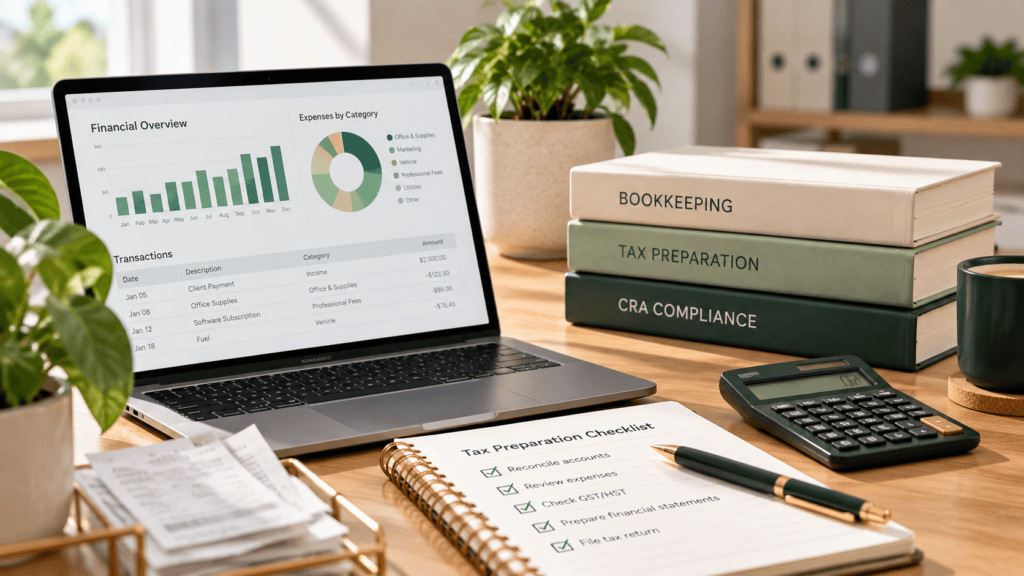
No single system works for everyone. The best expense tracking methods are the ones you can stick with all year. Effective expense tracking methods include automated apps, spreadsheets, and manual notebooks, and using a simple system can enhance budgeting consistency and effectiveness.
A notebook and pen works if you prefer something tangible and low-tech, though it requires discipline and makes searching past records difficult. Spreadsheets, including Google Sheets, suit people who like control. Spreadsheets can be customized for personal budgeting needs, and you can add formulas for totals, tax estimates, and profit margins for side businesses.
The envelope system uses cash for specific budget categories. For example, you might set up four envelopes at the start of October: Groceries, Fuel, Eating Out, and Miscellaneous. When an envelope is empty, spending in that category stops. It works well for controlling variable costs and building awareness of spending habits.
Zero-based budgeting assigns every dollar a specific job each month, which pairs well with apps like YNAB. The 50/30/20 rule allocates 50% for needs, 30% for wants, and 20% for savings, offering a simpler framework for people who want guardrails without granular tracking.
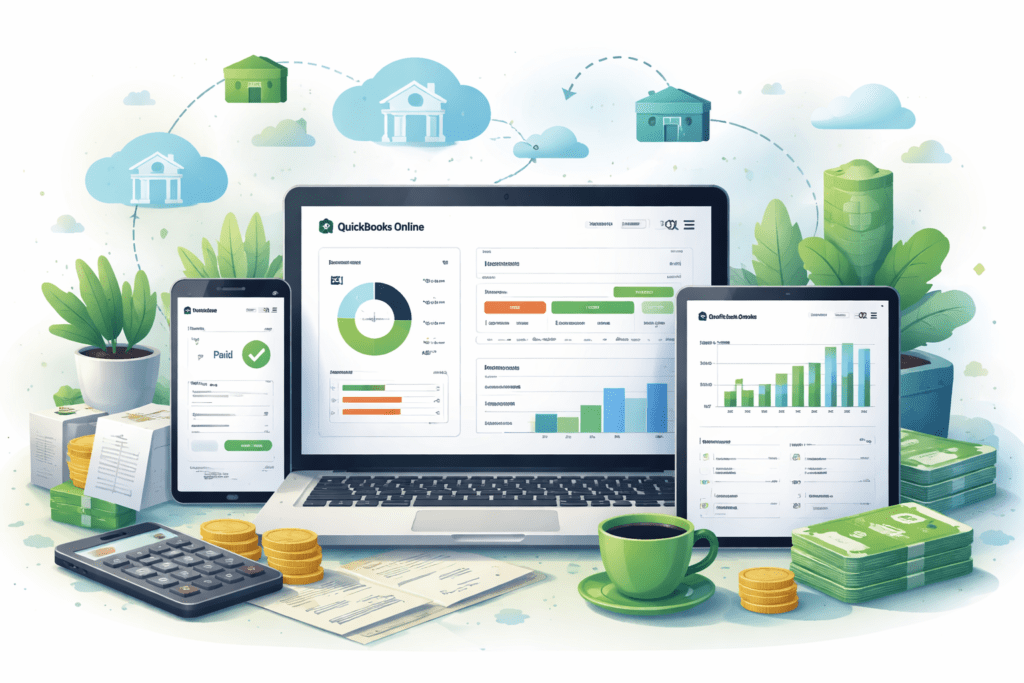
Busy Beans Accounting typically recommends structured systems that integrate with modern bookkeeping platforms such as QuickBooks Online, especially for growing businesses where the right tools make all the difference.
Use Budgeting Apps and Expense Tracker Apps Wisely
Budgeting apps generally track both monthly income and spending to help you plan future cash flow, while expense tracker apps focus mainly on recording and categorizing where money goes. Many modern tools combine both functions.
Automated budgeting apps securely link to bank accounts and track spending in real time, pulling transactions so you do not have to enter them manually. Many expense tracking apps sync with bank accounts for automatic tracking, and expense tracking apps can categorize spending into different categories like “Office Supplies,” “Software Subscriptions,” or “Dining Out.” Expense tracking apps help users monitor their spending habits without requiring hours of manual input each week.
Some expense tracking apps offer educational tools for budgeting, and users can find numerous free expense tracking apps on app stores to test before committing. Full-featured options typically cost $75 to $110 per year, with popular choices including YNAB, Monarch, and Rocket Money. Budget calculators built into these tools help track income and expenses effectively, and using a budget calculator can clarify your spending habits over time.
When choosing apps, check data security, the ability to export reports, and whether the app integrates with your accountant’s systems. Automating payments through these platforms can also improve financial management by avoiding late fees on utility bills, credit card bills, and other essentials.
Small business owners should talk with their bookkeeper before selecting apps, so their expense tracking apps align with the bookkeeping system used by firms like Busy Beans Accounting.
Make Friends with Your Bank and Credit Card Statements
Your bank statements and credit card statements are the most objective record of your spending money. Review bank and credit card statements regularly to track spending habits and catch errors before they compound.
Build a monthly routine: once a month, download or open statements for all bank accounts, your savings account, and business credit cards. Scan for subscriptions you forgot about, duplicate charges, or unexpected fees. Software trials that auto-renew in January or October are common culprits.
Use highlighters, filters, or conditional formatting to group expenses into different categories for a clear overview. Bank alerts keep users aware of spending but do not categorize transactions automatically, so pairing alerts with a manual or app-based review gives you the full picture.
This habit connects directly to reconciliation work that professional bookkeepers perform. Busy Beans Accounting relies on these statements, matched against receipts and recorded transactions, to keep your numbers accurate and CRA-ready.
Organize Receipts So They Actually Get Used
Paper receipts still matter in 2026 for both personal budgeting and business expenses. They provide proof for CRA, support warranty claims, and resolve vendor disputes. Under CRA rules, businesses must keep records for at least six years from the end of the last tax year they relate to.
For a low-tech system, keep a physical folder labelled “Receipts – Q4 2026” near your front door or desk. Drop paper receipts into it daily. For a digital system, snap a photo of every business receipt immediately and upload it to a secure folder or receipt-capture tool the same day. Dedicated receipt-scanning apps make tracking cash spending easier and reduce the chance of losing important documentation.
Consistent receipt organization makes it easier for expense trackers and bookkeeping software to match documents to bank transactions during monthly reviews. When new clients come to Busy Beans Accounting with a box of unsorted receipts, the team systematically ties them to bank transactions to clean up historical records and get everything back on track.
Set Up Clear Expense Categories for Better Insight
Tracking is only useful if you can see patterns, and patterns show up through clear, consistent expense categories. Categorizing expenses helps track spending patterns effectively and turns raw financial data into informed decisions.
Here are example lists of different categories:
| Household Expenses | Business Expenses |
| Rent or mortgage payments | Advertising and Marketing |
| Groceries | Software and Subscriptions |
| Utility bills | Travel and Meals |
| Transportation and car payment | Contractors and Employees |
| Child care | Office Supplies |
| Health insurance | Professional Fees |
| Debt payments | Rent or Lease |
| Emergency fund contributions | Insurance |
Using the same categories every month lets you compare October 2026 to October 2025 and quickly spot where costs are climbing. Accurate categorization helps your accountant maximize deductible business expenses and build meaningful cash flow and profitability reports.
Firms like Busy Beans Accounting build standard category lists tailored to each client’s industry, so expense tracking becomes more consistent and reliable over time. The 50/30/20 rule allocates 50% for needs and 30% for wants, which can serve as a starting framework for organizing household expense categories.
Turn Expense Tracking Into a Weekly and Monthly Habit
Consistency matters more than perfection. Small, regular check-ins beat big, stressful catch-ups every time. Weekly check-ins can help track spending and ensure alignment with budget goals.
For a weekly routine, set aside time every Sunday evening to open your app or spreadsheet, enter any missing cash transactions, and quickly review the week’s spending. Regularly monitor your income and expenses for better financial decisions, even if the review only takes ten minutes.
For a monthly routine, reconcile totals against bank statements, double-check that no fixed expenses or discretionary expenses were missed, and adjust the next month’s budget accordingly. Set a schedule to review your budget monthly or quarterly so nothing slips. Setting realistic budgets and reviewing them regularly is essential for effective budgeting over the long term.
Suggest setting recurring calendar reminders on specific dates, such as the 5th and 20th of each month, to keep expense tracking from slipping. Busy Beans Accounting follows a similar structured monthly process for clients, so owners always know what has been done and where they stand financially. It is just that kind of structured rhythm that keeps your overall finances healthy.
What to Do When Your Expenses Exceed Your Income
Running negative, when expenses exceed income, is more common than most people admit. But it must be addressed quickly to avoid debt spiraling.
Start by pulling the last 90 days of transactions from your bank account and credit card statements. Total each of your different categories and look at where the money is actually going versus where you thought it was going. Separating fixed and variable costs helps in managing expenses and shows you where you have room to move. Identifying flexible and necessary expenses allows better spending adjustment within 30 days.
Discretionary expenses like restaurant meals, non essentials, online banking subscriptions, and ad campaigns are places to start cutting. Accounting for irregular expenses and unexpected expenses in budgeting prevents financial emergencies from catching you off guard.
Create a temporary emergency budget where spending money on non-critical items is paused for a set period, say November through January, to restore positive cash flow and rebuild your emergency fund. Setting limits on variable categories during this period helps you save money faster and reach your savings goal.
Business owners who repeatedly see expenses exceed revenue should reach out for professional advice. Busy Beans Accounting offers detailed cash flow reviews and cleanup services that help you understand your margins and get back to positive net income.
When and How a Professional Bookkeeper Can Help
DIY expense tracking works up to a point, but growing businesses often need structured support to keep up with all the bills, pay obligations, and compliance requirements.
Here are signs it is time to call in help:
- You are months behind on categorizing business expenses.
- Tax deadlines are approaching and your records are disorganized.
- Multiple bank accounts and credit cards make reconciliation overwhelming.
- Your cash flow is unpredictable and you cannot tell if your business is profitable.
A professional bookkeeping firm like Busy Beans Accounting uses modern expense tracking tools, bank feeds, and clear processes to make sure nothing slips through the cracks. The team handles accurate monthly reports, organized records for taxes, timely payroll, and consistent monitoring of cash flow, all through platforms like QuickBooks Online and Dext.
You do not need to have everything figured out before reaching out. Whether you want to start tracking from scratch or need someone to make sense of years of messy records, Busy Beans Accounting provides judgment-free support. Book a free discovery call to get a clear view of where your books stand and what it takes to move forward with clarity, confidence, and calm.
FAQ: Common Questions About Expense Tracking
How often should I track my expenses to see real results?
Daily or every-other-day tracking is ideal for personal expenses, while weekly check-ins combined with a monthly reconciliation work well for small business owners. The real key is consistency. Picking a rhythm you can maintain and tying it to an existing habit, like Sunday evening planning, makes it easier to sustain. You do not need to regularly track every receipt the moment you get it, but you do need a routine that keeps you from falling months behind.
Do I really need receipts if my bank and credit card statements show everything?
Statements show amounts and vendors, but receipts often show detail needed for tax purposes, such as what was purchased and who attended a client meal. For Canadian businesses, keeping receipts supports CRA requirements and helps your bookkeeper confidently claim legitimate tax deductions. Relying on statements alone is not enough to satisfy an audit.
What is the difference between budgeting apps and expense tracker apps?
Budgeting apps usually track both income and spending to help you plan future cash flow and set a savings goal, while expense tracker apps mainly focus on recording and categorizing outgoing money. Many modern tools combine both functions, so look at features and choose what best fits your spending habits and financial goals.
Can I use the envelope system and apps at the same time?
Combining the envelope system with digital tools is common and can work well. Cash-based envelopes handle categories like groceries while apps track card and online banking transactions. Record envelope withdrawals as a single entry in your expense tracking app or spreadsheet to keep your overall budget and cash flow picture complete. Many people find this hybrid approach gives them a clearer picture of both cash and digital spending.
How can Busy Beans Accounting support my expense tracking if I am already using apps?
The firm works with the data you already collect, helping you clean up categories, reconcile app data with bank statements, and translate raw transactions into clear financial reports. Busy Beans Accounting focuses on ongoing bookkeeping, payroll, and tax support for Canadian small businesses, so your expense tracking flows smoothly into year-end and compliance work. You can save time by letting the team handle the heavy lifting while you focus on running your business. The ways to track expenses may vary depending on your industry, but having a professional partner ensures your records stay accurate regardless of which tools you choose.